Lord of Seas: Survival & War
- 4.7
- Rating
- 1.00M
- Installs
- Free
- Price

 Analysis by App-foxy
I went into Lord of Seas: Survival & War expecting a quick ocean-themed strategy game, but it is better understood as a long-term management game with battles attached. You build up a maritime base, make decisions about expansion and protection, and gradually turn a vulnerable starting position into something that can support larger ambitions. The first few minutes are approachable, while the deeper appeal comes from deciding what deserves your attention when resources, time, and safety are all limited.
That distinction matters for a first-time player. This is not the kind of strategy game where every session ends with a neat victory screen. Some sessions are about preparing, upgrading, or recovering. Others are about taking a calculated risk. I found the most satisfying progress came from treating each action as part of a wider plan rather than tapping every available button as soon as it appeared.
Getting oriented before the sea becomes complicated
Atlas Studio Co., Ltd. presents the game as a survival and war strategy experience set on the ocean. In practice, that means the game combines a base-building routine with military decisions and a steady need to think ahead. It belongs to the strategy category, but it does not feel like a compact puzzle game or a traditional turn-based board game. The world keeps asking you to manage several priorities at once.
You May Also Like

 Blood Strike: 2.5 Anniversary
Blood Strike’s Loadouts Turn Every Drop Into a Tactical Gamble
A close look at Blood Strike’s custom loadouts: how fast access to signature weapons reshapes its battle royale rhythm, rewards preparation, and narrows the gap between fights.

 Pandora - Music & Podcasts
Pandora’s Music Is Easy to Start, but Harder to Recover
Pandora’s strength is its low-effort path from a seed to a station. Its weak spot is how much confidence it asks you to place in connection, setup, and quiet recovery.

 8 Ball Pool
 Is Built on Rivalries, Rematches, and Routine
A close look at the rivalries, rematches, shared routines, and unanswered safety questions that turn a quick pool match into a persistent mobile community.

 Samsung Music
’s Quiet Strength Is Playing What You Already Own
Its reach comes less from spectacle than from dependable access to a personal library. That simplicity is both the app’s strongest retention engine and its ceiling.

 AccuWeather: Weather Radar
AccuWeather Review: A Quick, Clear Forecast for Everyday Decisions
For everyday plans, the best forecast is the one you can understand quickly. AccuWeather makes rain timing, radar, and local conditions easy to act on, with a few trade-offs.

 Hill Climb Racing
Why Hill Climb Racing Still Turns Crashes Into One More Run
A tiny car, a bumpy hill and one more upgrade: Hill Climb Racing keeps resurfacing because its simple chaos makes every near-miss feel personal.
More From Our News Desk



The free entry point makes it easy to try without committing money immediately. There are in-app purchases ranging from $0.99 to $289.99 per item, so I would recommend deciding early how you want to play. If you prefer a relaxed approach, progress needs to be treated as a gradual project rather than a race. If you are comfortable spending to accelerate development, the game gives that route room to exist, but the presence of expensive items is an important part of the overall experience.
The Teen content rating is also useful context. I would not describe this as a gentle decorating game with a nautical skin. Conflict and survival are central to the design, and the atmosphere is aimed at players who enjoy competition, pressure, and military planning. On the other hand, the presentation is accessible enough for someone who is new to mobile strategy, provided that person is willing to learn the interface instead of expecting instant mastery.
The public response is encouraging: the game holds a 4.7 average from around 56 thousand ratings, with over a million installs. Those figures suggest that the core loop has found a substantial audience, but they should not be mistaken for a guarantee that it will suit everyone. I think the strongest audience is made up of players who enjoy returning to the same world repeatedly and improving a position over time.
The first minutes are about learning priorities
When I first started, the most useful mindset was to see the opening guidance as a tour of the game’s vocabulary. Buildings, ships, resources, missions, and upgrades can all look equally urgent, but they are not equally important. The early prompts are there to get you moving; they are not a complete strategy for the hours that follow.
I suggest reading the objective text instead of tapping through it automatically. A task that appears to be a simple construction request may also be teaching you where future improvements are handled. Likewise, an early battle may be less about proving your strength than about showing how the game expects you to prepare before committing to a fight.
One practical habit helped me immediately: before spending a resource, I checked whether it was needed for the next visible objective. Early upgrades can feel cheap because the costs are small, but several small decisions can leave you unable to complete the next useful step. Keeping a modest reserve is less exciting than constant expansion, yet it reduces the stop-and-start feeling that can make a new strategy game seem slower than it really is.
How to reach the first meaningful success
Your first meaningful success should not be measured only by winning a battle. For me, it was completing an improvement cycle without running out of options: follow the opening task, strengthen the base, prepare the available forces, and finish with a clearer idea of what the next objective requires. That is the moment when the game changes from a guided sequence into a system you can make decisions inside.
To get there smoothly, I would follow a simple order. Complete the current tutorial instruction, inspect the available upgrade choices, and avoid spending everything on a single attractive improvement. Then check the military side of the game before starting an encounter. If the interface presents several ways to prepare, use the safest available route first rather than assuming the most aggressive option is automatically the best one.
This approach has a useful side effect: it teaches you to connect development with survival. A stronger base is not valuable if it leaves you unable to respond to danger, and a larger force is not automatically useful if your wider economy cannot support continued growth. The game becomes more understandable once those two sides are treated as connected decisions rather than separate menus.
Another tip is to pause after each completed objective and look at the whole screen. New players often focus on the highlighted button and miss the fact that the game has opened another decision elsewhere. I found that taking a few seconds to review the base, available tasks, and military status prevented me from entering the next stage with an unfinished preparation step.
Why the routine can be satisfying
The central pleasure comes from visible improvement. A small starting position gradually becomes more capable, and choices that seemed minor begin to shape what you can attempt next. I enjoyed the feeling of returning after a break and finding that the previous session had created a better platform for the next one.
That makes the game a good fit for short, repeated visits. Imagine checking it during a lunch break: you review the current objective, complete a manageable construction task, prepare for a future encounter, and leave with one clear priority for later. You do not need to force a major battle into every visit. In fact, trying to make every session dramatic can lead to wasteful decisions.
Longer sessions have a different rhythm. They are better for comparing upgrade choices, organizing your next sequence of actions, and thinking about whether your current position is ready for a risk. I would not recommend opening it when you want a completely passive experience, because the satisfaction depends on making choices rather than simply collecting rewards.
Common points of confusion for new captains
The biggest early confusion is the difference between activity and progress. The game may offer several things to tap, but completing more actions does not necessarily mean you are moving toward a stronger position. A player can spend time on attractive side goals and then discover that the main development path has been delayed.
I also had to adjust to the idea that a battle is not always the best next action. Strategy games often encourage immediate expansion, but here the survival theme makes preparation especially important. If an encounter looks uncertain, improving the foundation first can be more useful than chasing a quick win. This is one of the less obvious lessons in the opening: restraint can be an active strategic choice.
Another source of friction is the number of systems competing for attention. The game wants you to think about construction, military strength, objectives, and resources together. Players coming from a simple arcade game may find that busy. My advice is to choose one question at a time: What is my current objective? What blocks it? What resource or preparation do I need? That turns a crowded interface into a sequence of smaller decisions.
It is also easy to mistake speed for efficiency. If a purchase or acceleration option appears, ask whether it solves a real bottleneck or merely shortens a timer. Since the game is free to start but includes paid items, this question is worth making part of your routine. I would play several sessions before spending anything, because the early game is the best time to discover whether the long-term loop actually suits you.
Building a personal rhythm instead of chasing everything
Once the introductory path becomes less restrictive, I recommend creating a repeatable rhythm. Begin by checking the most important unfinished development task. Next, look at your ability to defend or attack. Finally, decide whether today is a growth session, a preparation session, or a recovery session. Giving each visit a purpose prevents the game from becoming a collection of disconnected taps.
A growth session focuses on improving the base and opening future options. A preparation session is about making sure your forces and resources are in a sensible state before taking a risk. A recovery session is useful after an expensive decision or disappointing result, when the best move is to rebuild rather than immediately repeat the same mistake.
This three-part distinction is more useful than trying to play at maximum intensity all the time. It also makes the game friendlier to people with irregular schedules. You can make progress without pretending that every login will be long enough for a major campaign.
Who will enjoy it, and who should skip it
I would recommend Lord of Seas to players who like watching a settlement develop, weighing military choices, and returning to a persistent strategy project. It is especially suitable for someone who enjoys the tension between saving resources and taking a risk. The ocean setting gives the game a clear identity, while the survival angle makes careless expansion feel more consequential than it would in a purely decorative builder.
It is less suitable for anyone looking for a self-contained game that can be completed in a few short sessions. It may also frustrate players who dislike waiting, repeated management, or the possibility that progress is more satisfying when approached patiently. If you want direct action with little planning, an arcade naval game would probably be a better choice. If you want a deep, highly precise strategy simulation with no mobile-style friction, a full-scale desktop or console strategy title may offer more control.
Compared with usual mobile base-building alternatives, this game’s ocean setting and survival framing give its decisions a stronger sense of vulnerability. Compared with competitive war games, it places more emphasis on developing the position that supports your actions. That middle ground is its appeal, but also its limitation: it may feel too involved for casual action fans and not granular enough for players seeking a hardcore simulation.
What changes after the opening
The current version is 5.33.0.5081, and I found the overall experience easier to appreciate after the initial instructions stopped doing all the thinking for me. The game’s value is not in a single spectacular feature; it is in how the connected tasks create a reason to plan the next visit.
At this stage, I would stop treating the tutorial’s order as a permanent rule. Use it to understand the basics, then compare the available choices yourself. If an upgrade improves immediate safety but delays broader growth, decide based on what your current position needs. If a military opportunity appears while your foundation is weak, consider whether the reward justifies the risk.
A particularly useful workflow is to end each session with a deliberate next action in mind. Do not simply close the game after collecting or completing something. Decide whether you will return to upgrade, prepare, or attempt an encounter. This small habit makes the next login faster and reduces the temptation to spend resources impulsively.
I also recommend keeping notes mentally, or even briefly on paper, about what caused a setback. Was the problem poor preparation, an upgrade choice, or spending too early? Mobile strategy games can make losses feel vague, but identifying the cause turns them into information. That is where the survival theme becomes more than decoration: the game rewards learning how to avoid repeating an expensive mistake.
My recommendation after spending time with it
Lord of Seas: Survival & War is a solid free strategy game for players who want an ocean setting, a growing base, and a steady mixture of preparation and conflict. I liked that the first success is not just handed over as a flashy victory; the game gradually teaches why development, resources, and military choices need to support one another.
It does require patience. The paid-item range means I would approach it with a clear spending boundary, and the layered systems can feel busy until you establish your own routine. Those are not small details, but they are manageable if you enjoy long-term progression and do not expect every session to deliver a major battle.
For a first-time player, my advice is simple: follow the opening guidance carefully, preserve resources, prepare before attacking, and give each visit one clear purpose. If that rhythm sounds enjoyable, the game has enough structure to keep offering meaningful decisions beyond the first successful action. If it sounds like work, you will probably be happier with a faster strategy alternative. For me, the game earns a recommendation because its best moments come from turning a fragile ocean position into a plan I can trust.
FAQs for Lord of Seas: Survival & War
01What is Lord of Seas: Survival & War about?
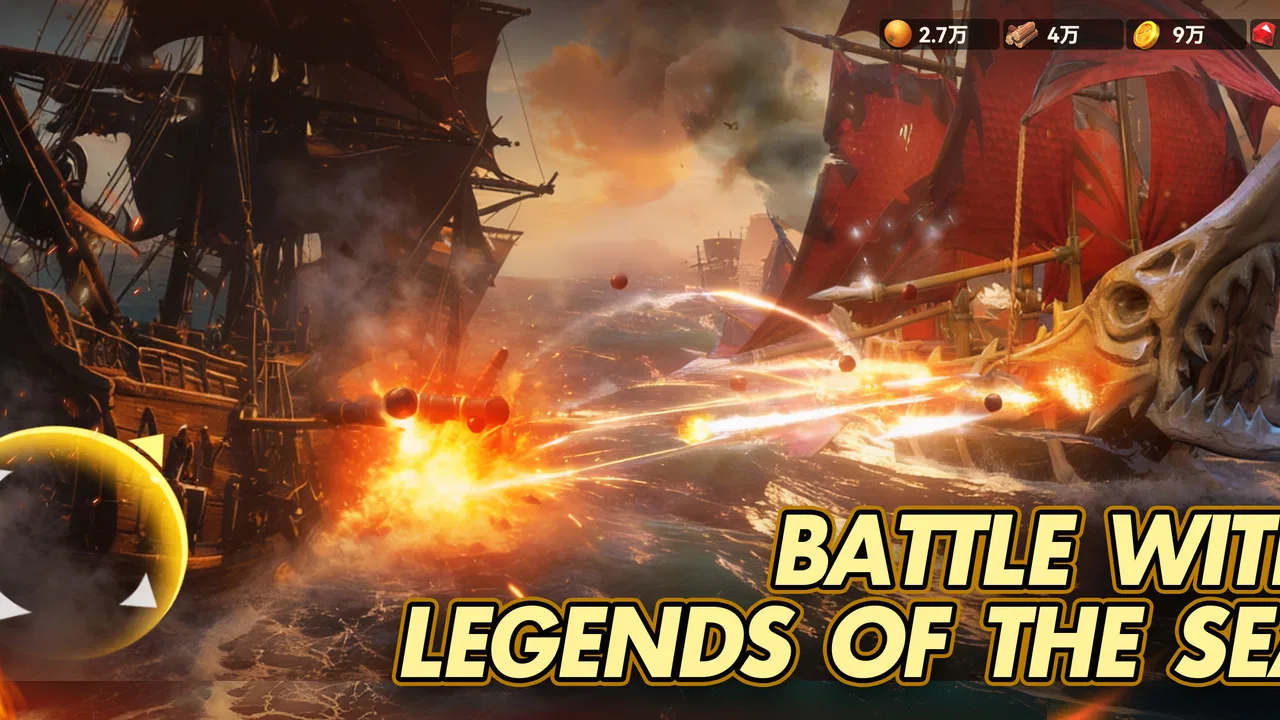
Lord of Seas: Survival & War is a strategy game that combines ocean exploration, base development, naval battles, resource management, and alliance gameplay. You build and upgrade your maritime settlement, recruit commanders, collect ships, and fight rival players or enemies controlled by the game. Progress depends on planning your upgrades, managing resources, and choosing the right fleet for each battle.
02Is Lord of Seas: Survival & War free to download and play?
The game is generally free to download, allowing players to begin building their base and fleet without paying upfront. However, it includes optional in-app purchases for resources, speed-ups, premium currency, and progression bundles. Free players can enjoy the main experience, but advancement may feel slower later on, especially when competing with highly active players who spend money on upgrades.
03Does the game require an internet connection?
Yes, Lord of Seas: Survival & War is designed as an online strategy experience and normally requires a stable internet connection. Online access is needed to synchronize your progress, participate in real-time events, interact with alliances, attack other players, and receive updates from the game servers. It is therefore not a suitable choice if you are looking for a fully playable offline naval game.
04Can I play with other players or join an alliance?
Multiplayer interaction is an important part of Lord of Seas: Survival & War. You can join or create an alliance, communicate with other members, contribute to group research, participate in cooperative activities, and coordinate attacks or defenses. Being part of an active alliance usually makes progression easier because members can provide assistance, share strategies, and access rewards that are more difficult to obtain alone.
05Is Lord of Seas: Survival & War suitable for casual players?
Casual players can enjoy the game, particularly during the early stages when construction, exploration, and fleet development move at a comfortable pace. Nevertheless, the title uses timers, recurring events, alliance activities, and competitive rankings that reward frequent logins. Players who only check in occasionally may progress more slowly and could struggle to keep pace with dedicated users, especially on competitive servers.
Pros
- Large world with plenty of islands
- resources
- and locations to explore.
- Frequent events and missions provide extra goals beyond the main progression.
- Alliance features make cooperation and coordinated attacks more rewarding.
- Detailed ship designs and pirate-themed visuals create an appealing atmosphere.
- Multiple upgrade paths let you customize fleets and improve different abilities.
Cons
- Progress can become heavily dependent on timers and repeated resource gathering.
- Competitive battles may favor players who spend money on upgrades and boosts.
- The interface can feel crowded
- especially when managing several menus and systems.
- Some activities require long waiting periods unless speed-up items are used.
- The game may consume significant battery and storage during extended sessions.

Lord of Seas: Survival & War
Gallery